
Welcome Home
Why making a change in your front garden can give you so much back

First Thing You See When You Leave, and When You Return Home
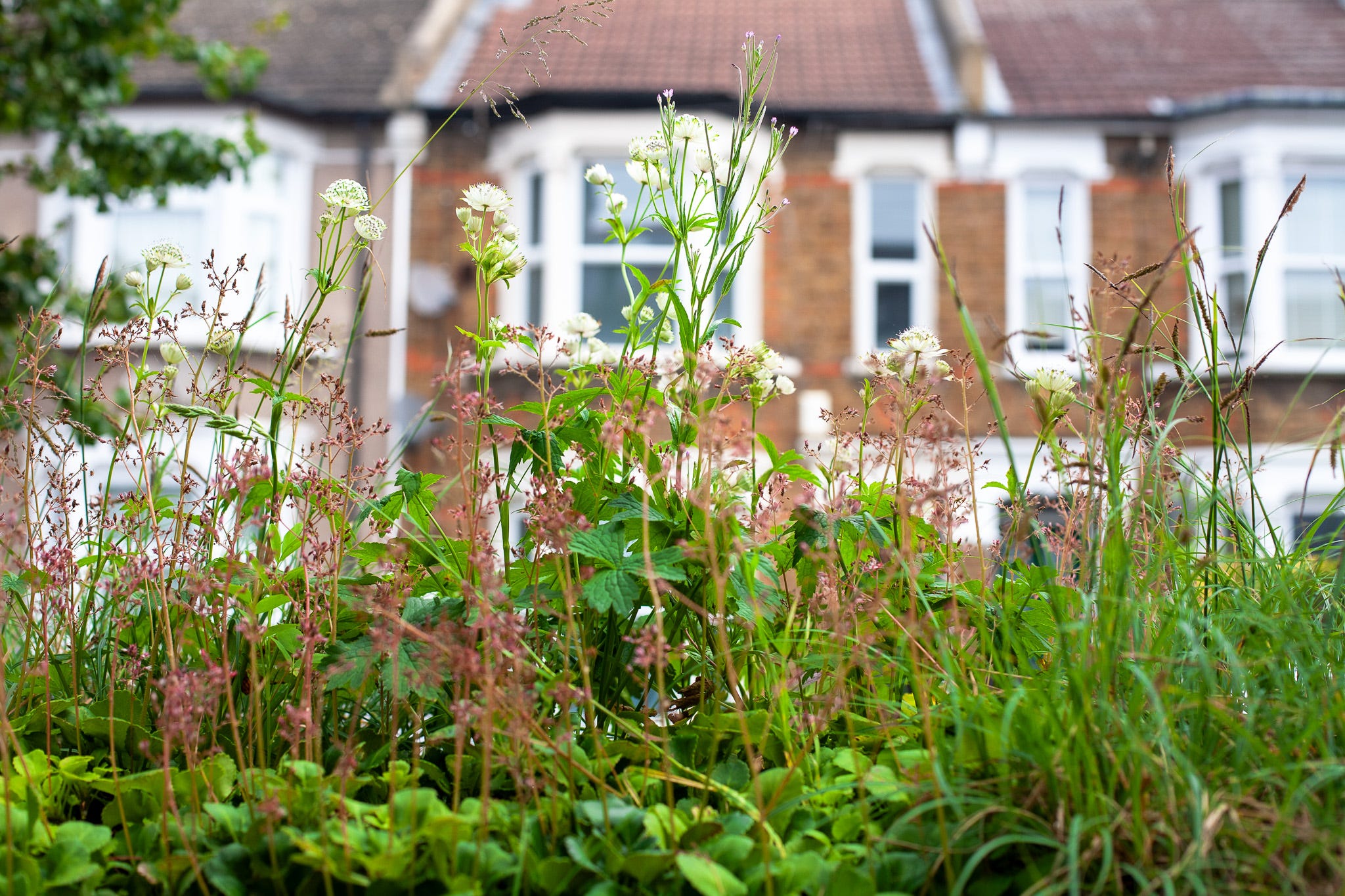
The front street seen through bin store planting. Photo by Lian Li
Throughout this piece, I’m going to use my clients’ words about their front gardens, as often clients explain effects better than I ever could. I’ve started with these words that highlight how a front garden can welcome you as you return home:
Every time I come home, I think, “It’s so pretty!’’
Julie Wood
The front of the house is the first thing you see when you get home so having a beautiful garden there sets you up for your return home - the garden really makes our home feel complete.
Daniel Bailey
Plants are good for us – who knew?
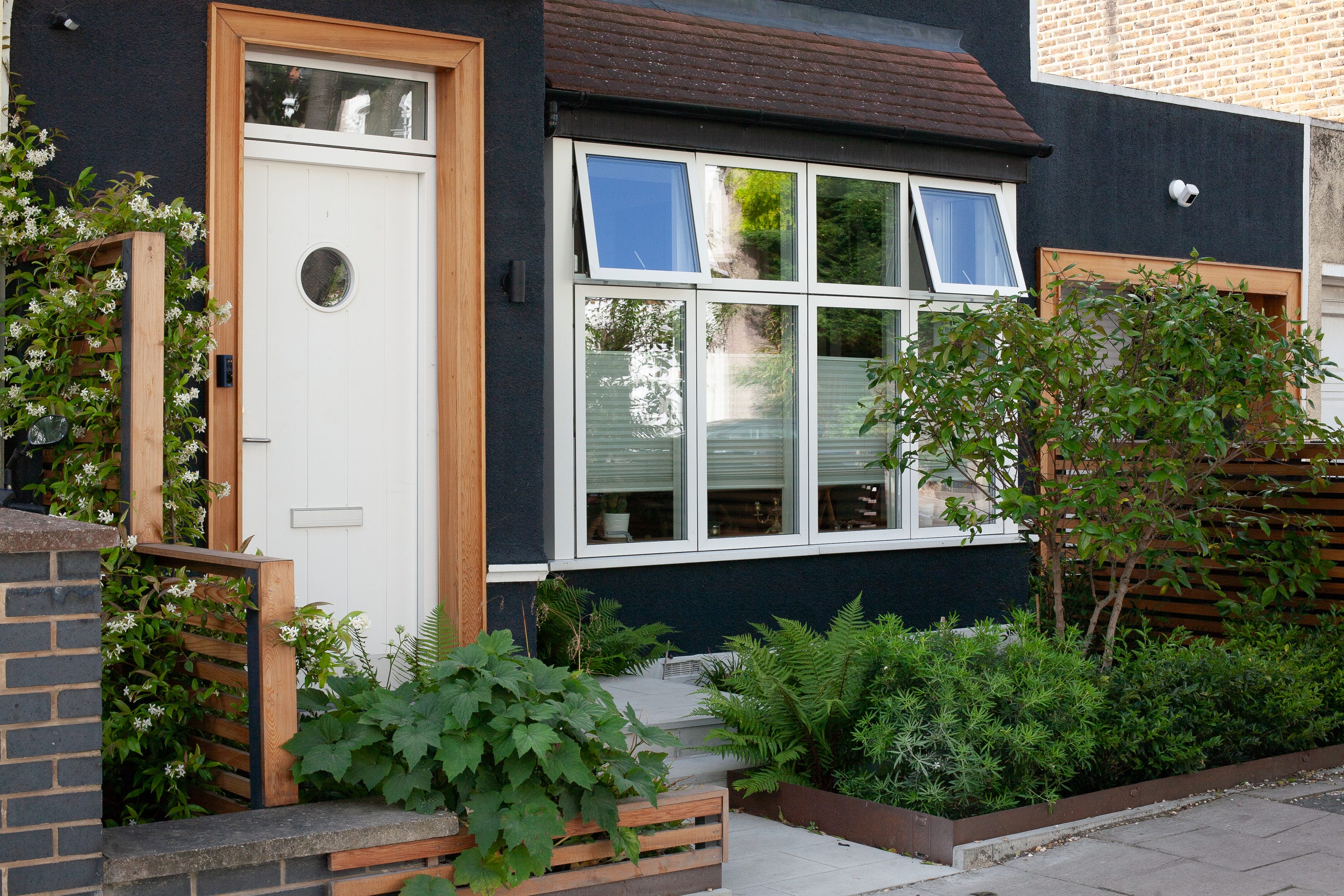
Plant filled instead of wasteland
It’s completely transformed now from previously being a wasteland. It’s hard not to smile – hard to take your eyes off it!
Rune Bringgaard
I think we innately feel that plants are good for us and cheer us up, but honestly, because a lot of people consider anything to do with gardens a bit of a lightweight subject, I find it’s always good to have the science to back it up. Helpfully, Dr Lauriane Suyin Chalmin-Pui, (the first RHS Wellbeing Fellow) researched the therapeutic effects of front gardens during her PhD at the University of Sheffield. Just a few plants were given to 42 residents to put outside their front doors on a previously bare street in Sheffield. By measuring cortisol in the residents over a period of 4 years, it was found that their cortisol reduction was equivalent to 8 mindfulness sessions - a significant result.
Using Scented Planting
How scented planting works for us is one of the easiest ways to understand the ways in which plants can benefit our wellbeing. Scent is the only sense that has a direct neural pathway to the area of the brain where memories are formed. This means that when we catch a certain scent, it often brings back vivid memories and emotions. We can use this characteristic of scent as an effective anchoring tool – to signal calm for instance, or just to bring about a smile as my client says above. What better way to leave your house or return home? I love including scented plants in any garden, but for this reason, their inclusion is even more meaningful in a front garden.
The Most Public of Private Gardens
It’s true that when I’m out gardening in the front, people do stop to commend me on my work, or to ask me what I’m doing. I explained why I was picking weeds out of gravel to a passing toddler last summer. He didn’t seem to think it was a worthwhile activity! I must also admit that I spend a lot of time hacking back an inherited Forsythia. Do not plant this in your front garden. So much work for so little gain – it’s really only interesting for a minute in March when it’s covered in yellow blossom. The rest of the year it’s just work. I am not a social gardener, I prefer the peace and calm of the activity in my nice, private back garden thank you, and I believe that many people think the same way. For this reason, it’s better to keep the plants in the front as low maintenance as possible, as, even if you enjoy gardening, you are less likely to want to spend your precious gardening hours out there.
I don’t believe that, for most people, engaging with their community is the primary driver for them wanting to improve their front garden. That said, it it is nice to know that improving your own garden contributes to the greater good, as so many other people can enjoy it as they walk past. As one client said:
We really enjoy how many people stop to look at the front garden and comment to us on how fabulous it looks
So what is the main driver for improving your front garden? Could it be taking pride in your garden - specifically the kind of pride where your garden is better than your neighbours’?
A while ago one of my clients messaged me about her front garden to say
neighbour was delighted when I said that I had a garden designer, cause otherwise she was jealous
So it’s OK that it’s pretty because a professional designed it, but not if my client had done it herself? That did make me laugh.
Here’s another client comment following a similar theme:
I’ve gone from having the worst (front garden) to best on the street and I get lots of compliments saying ‘I like what you’ve done’
Whatever the drivers, I’m just happy that people do want to add plants to their front gardens, as so many are just paved over entirely, which I’ll discuss more below.
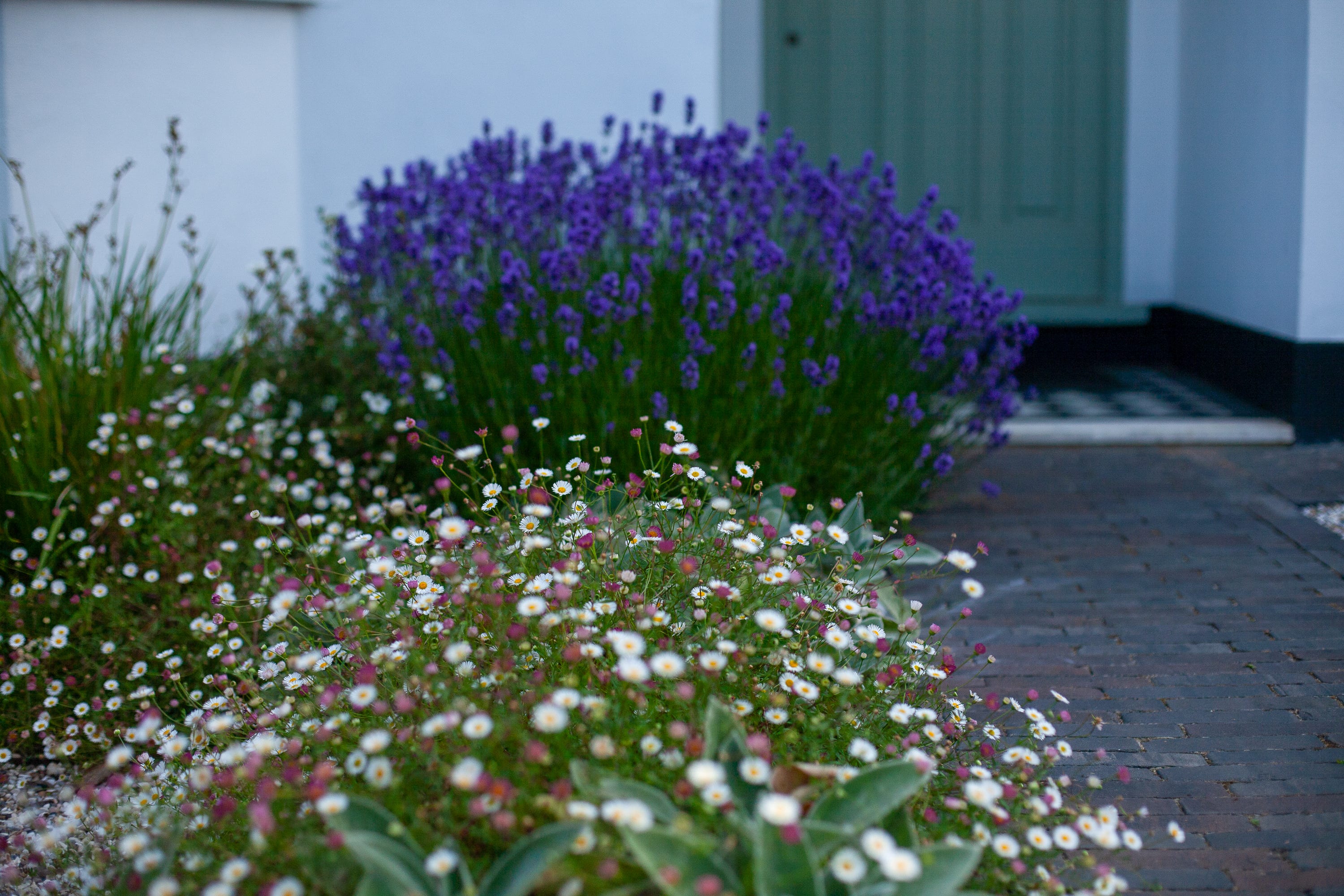
A bit of lavender for scent and evergreen interest by the door is a lovely thing
Front Garden Planting
From a planting point of view, the critical thing to consider is that they are always on show, and the additional requirement to be as low maintenance as possible. For this reason, evergreen planting is useful. If it can be scented too, then so much the better! If you refer back to my recent love letter to shrubs on Substack, you’ll quickly understand why I include so many in front garden designs as they can provide evergreen appeal and scented seasonal interest, with low maintenance as a bonus. Often in a rear garden, too many evergreens can look too heavy, with a lack of seasonal interest, but in the front, you can reverse the proportion to give a consistently green appearance, with choice seasonal highlights still providing interest throughout the year.
Paving in front gardens
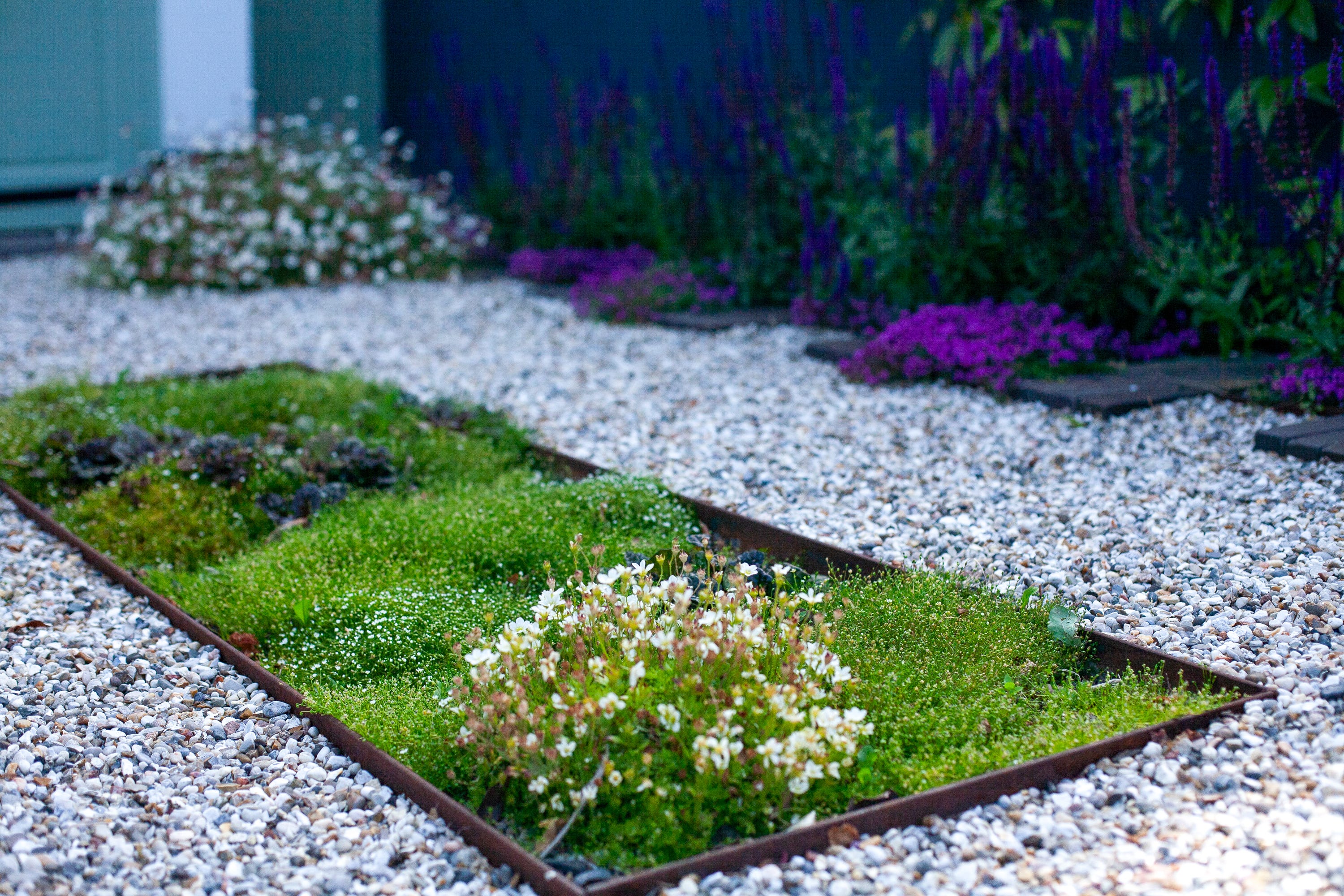
Sneaking planting onto and around driveways
I know car parking in front gardens is very frowned upon by the garden design community generally (we just want to add plants everywhere, I get it!), but often in busy cities such as London, I think we need to be pragmatic. Street parking can be impossible, and the stress involved in regularly trying to find a parking space, and carting small children and shopping from said parking space to house will quickly undo any wellbeing benefits planting in a front garden might bring to its resident. Instead, I’ve been trying to find ways of sneaking planting onto and closely adjacent to parking spaces, allowing as little space as possible for the parking itself.
Many people understandably don’t realise that UK planning law only permits 5 square metres of impermeable paving in a front garden. I say understandably as many, maybe most front gardens we see, are entirely paved over, and planning departments do not seem to ever enforce this law. The law is there for good reason though, as our creaking Victorian UK drainage system really can’t handle the rainwater run off from all that paving, and it’s entirely avoidable by using permeable paving. Permeable paving allows the rainwater to drain into the ground rather than being directed off into drains, and examples of good permeable materials are gravel, or small pavers whether they be concrete or clay, with lots of gaps between them to allow the water to drain into a substrate (the stuff below the paving that no one but garden designers and landscapers care about!)
The parking issue and the desire for front gardens to be as low maintenance as possible explains why, according to the 2025 RHS State of Gardening Report, around 50% of front gardens UK wide are paved over. The report also states that we have a whopping 16.6 million front gardens in the UK.
If we make that 50% of paving permeable, and even reduce that paving percentage down by introducing as much planting as possible, just think what a difference each individual garden could make, if we consider how many gardens we have as a whole.
Front Garden Briefs
Sometimes there’s a place to sit in a front garden, but more often, there’s simply a path from pavement to front door, somewhere to store bins, and sometimes somewhere to store bikes and/ or to park your car. In brief, they tend to be smaller and more utilitarian than rear gardens. For that reason, they also tend to be easier to make changes to yourself.
Making a Change
If you’ve been thinking about improving the planting in your own front garden this year, but are not sure where to start - what plants to add, how to combine them, or how to keep things low maintenance, I’ve created something that might interest you.
Next Tuesday, 20th January, I’m running a one hour live workshop, Welcome Home: Planting a Beautiful, Low Maintenance Front Garden in 3 Simple Steps, where I’ll share planting palettes from two real gardens (one in sun, one in shade), a case study for inspiration, and a simple, ‘no drawing required’ way of working out planting numbers and placement.
If you’d like to learn how to create planting that really welcomes you home, you can find all the details and book your place below.